We do not believe in power. We believe in responsibilities.
Every position in this party — from booth volunteer to elected representative — is a responsibility taken on, not a power claimed. Office is something you owe back to citizens, not something you possess. The recall mechanism exists for the day it stops being so.
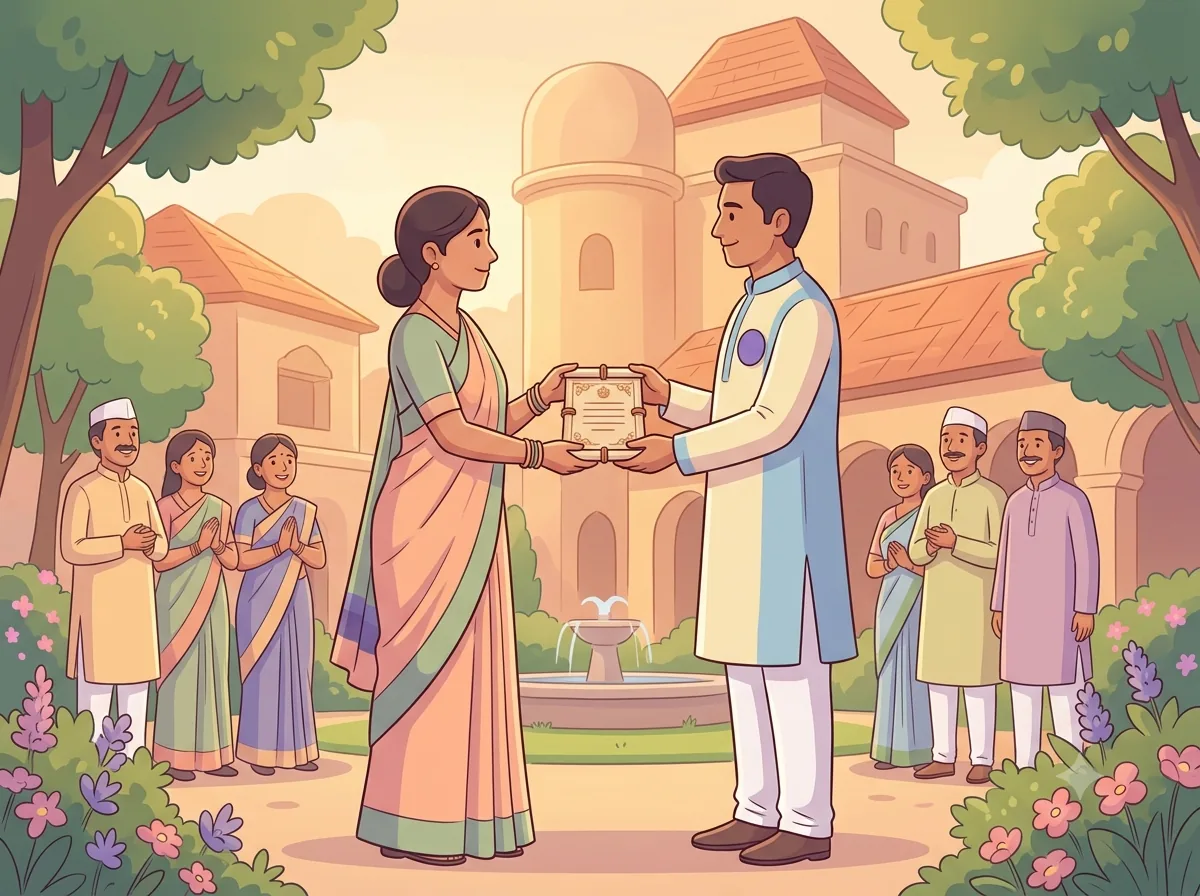
Why this comes first.
Every other principle in this party — caste-blind operation, religious neutrality, no political defectors, the leadership rubric, the binding Code of Conduct — is downstream of this one. If a member or a candidate treats office as a possession, every other rule unwinds.
The clearest internal consequence is The Oath Boundary: we develop candidates as party members up to the day of the oath. The moment they are sworn in, they become public office-holders, not party operatives. Loyalty flips from party to citizens.


Three layers kept strictly separate.
Mixing the layers produced the contradictions that have undermined every previous attempt at caste-blind or religiously-neutral politics in India. We keep them apart by binding rule, not aspiration.
Caste-blind by binding rule
No caste field on the application form. No caste-coded ticket distribution. No caste consideration in leadership selection. No caste-targeted campaign material. No caste-based factions. Infractions enforceable up to expulsion through the Volunteer Code of Conduct.
Constitutional reservations fully respected
Reservations enshrined in the Constitution of India and in Karnataka state law for Scheduled Castes, Scheduled Tribes, Other Backward Classes, and Economically Weaker Sections are not disrupted. The government as a constitutional authority discharges its duty to remedy historical injustice; this is constitutional law, not party choice.
By public deliberation, never party fiat
Any future change to reservation policy is decided through structured public deliberation: published question framing, published evidence, a statistically-representative citizen panel, a citizen poll on a published methodology supervised by an independent body. The party may have a position; the party does not have the right to impose one.
No religious test at the party level. Constitutional secularism at the government level.
No religion field
No religion field on the application form. No religious affiliation recorded or stored. No religious consideration in candidacy or leadership. No religious wings, no religious caucuses, no religion-based outreach. Communications use no religious symbols or greetings; members' personal religious identity is personal, never party-coded.
Constitutional secularism
Article 25-28 of the Constitution guarantees freedom of religion; Karnataka state law respects this fully. The government does not endorse or oppose any religion's public expression. It discharges its constitutional duty to protect minority rights, prosecute communal incitement under existing law, and ensure equal access to all public services regardless of religion.
We do not import sitting or former politicians from other parties.
We do not borrow legitimacy from former MLAs, MPs, ministers, or party functionaries who decide their existing party is no longer convenient. Members and candidates develop inside The People's Model, not laterally into it. The exception process — for people of exceptional civic standing with no political baggage — is published, narrow, and rare.
This is not snobbery. It is the recognition that political habits formed under different incentives don't reset on entry. We can build a different politics; we cannot retro-fit one.


The party builds the platform. The government runs the state.
The party and the government are two different things, and we keep them that way by binding rule. The party persuades; the government executes. The Constitution governs; the manifesto is a proposal to the public, not an instruction to the civil service. We refuse the fusion that lets parties capture the machinery of the state and call it governance.
Civil servants take orders from Cabinet, not from us.
No party office holds executive authority over departments, postings, transfers or procurement. Party members holding government office serve in their constitutional role, bound by oath and rule, not by party command line.
Loyalty flips on the day of the oath.
We develop candidates as party members up to the day they are sworn in. The moment the oath is taken, they are public office-holders accountable to all citizens — including those who voted against them. The party is one of their inputs, no longer their employer.
The state has no party colour.
Government programmes, websites, schools, hospitals and PHCs carry the symbols of the Republic and of Karnataka, never of any party. A change of government does not require repainting public infrastructure. The Open Ledger is published by the state, not by us.
This principle is the load-bearing wall under every other commitment in the manifesto. Without it, the Open Ledger gets edited to flatter the ruling party. JANATA becomes a propaganda channel. Universal health turns into a queue of party loyalists. We refuse all of that, in advance, in writing.
How the manifesto is being made.
The manifesto is the work of one person so far — accumulated over several years as a side project, not a funded research effort, no commissioned consultancy. The work is being released for public review now, before party registration, because review by citizens is what gives a manifesto legitimacy.

Public preview
The full manifesto is published in TPM Reader format and as a single 663-page PDF. Anyone may comment, paragraph by paragraph. Every comment is read and actioned.
Bilingual + accessibility
English finalises in parallel with the Kannada translation. Accessibility tooling, screen-reader optimisation, low-literacy-friendly summaries. The manifesto must work for every citizen who wants to read it.
Party registration
Sec 29A registration with the Election Commission of India. Donation infrastructure moves to a separately-disclosed party account. Contesting elections starts only after the team has built the base required and after the manifesto has been through proper public review.