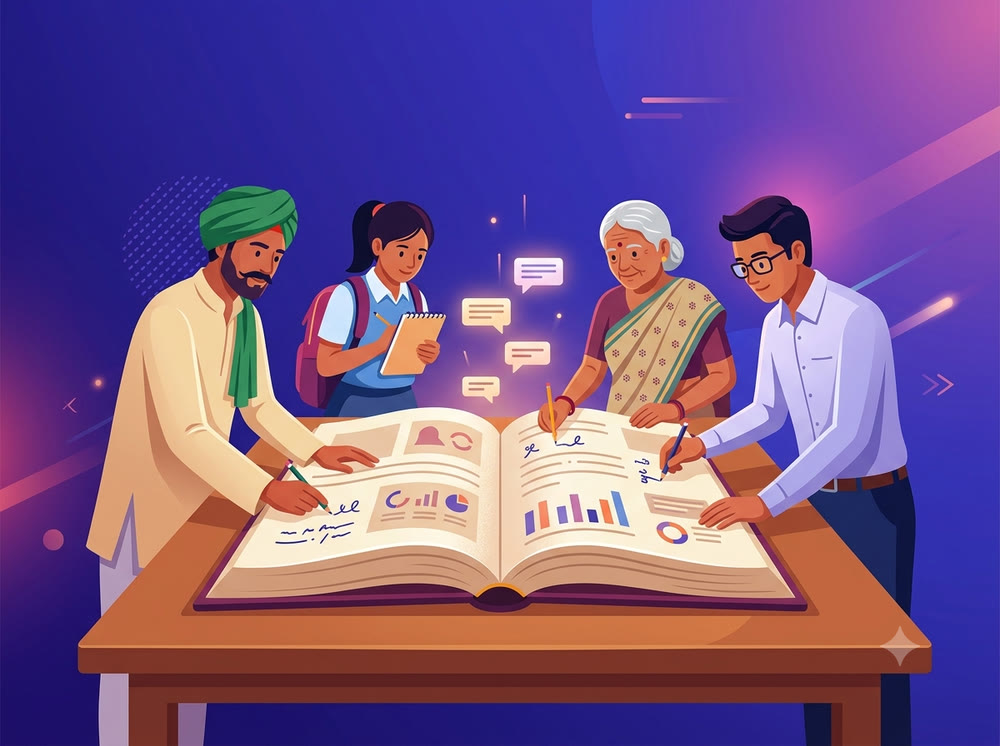
Every rupee. Every contract. Every milestone.
A public financial dashboard, published live. No procurement is private. No cost overrun is invisible. Every transfer of public money sits on one ledger any citizen can read — searchable, drillable, downloadable.

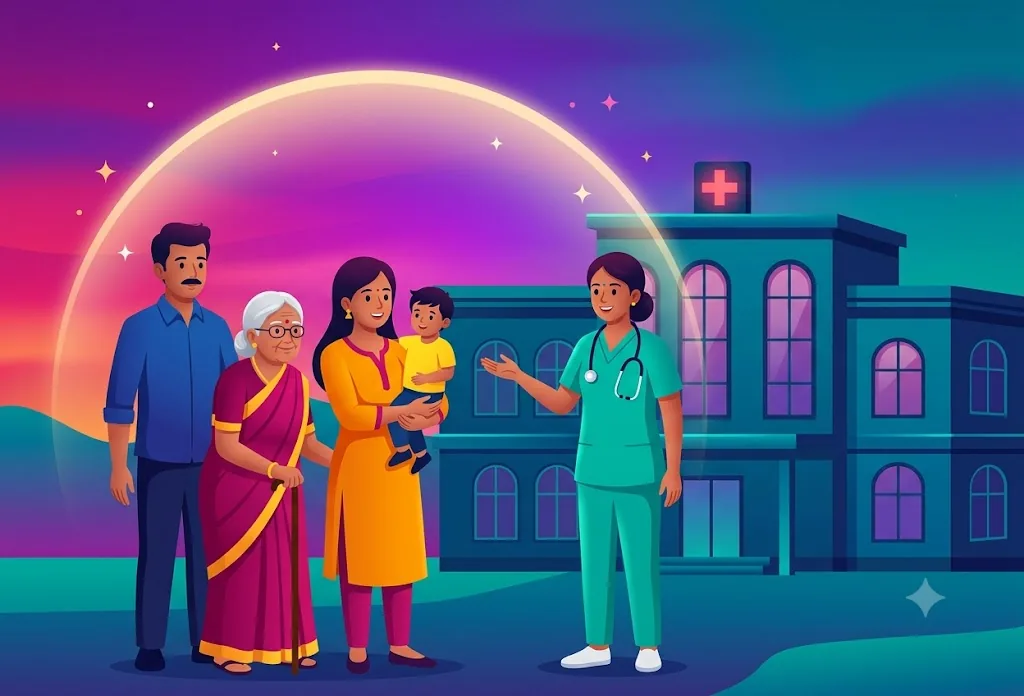
Care no one can predict, no one should bear alone.
By Year 10, every Karnataka resident has free diagnostic-and-treatment access for every unforeseen serious illness — every district hospital and tertiary hub equipped, with no means test. Elective and lifestyle care remains paid. What you cannot predict and cannot bear alone is the state's burden.
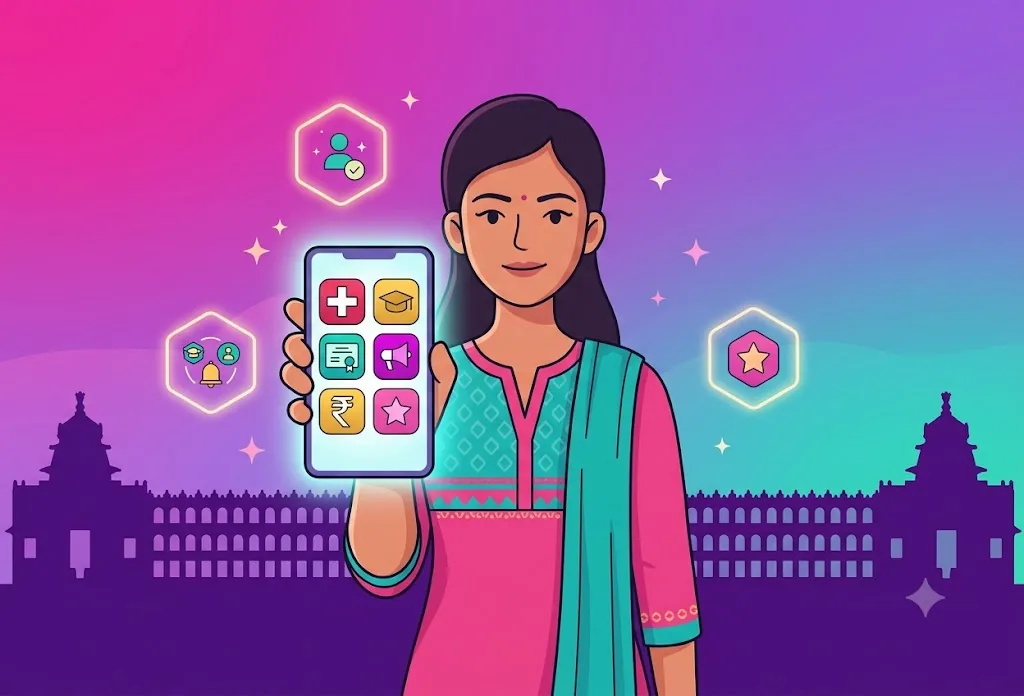
One state. One app. Total access.
Every citizen service through one accountable front door. Health records, school case files, certificates, complaints, ratings, payments — on a single app designed to work offline, Kannada-first, that never asks you to upload the same document twice.
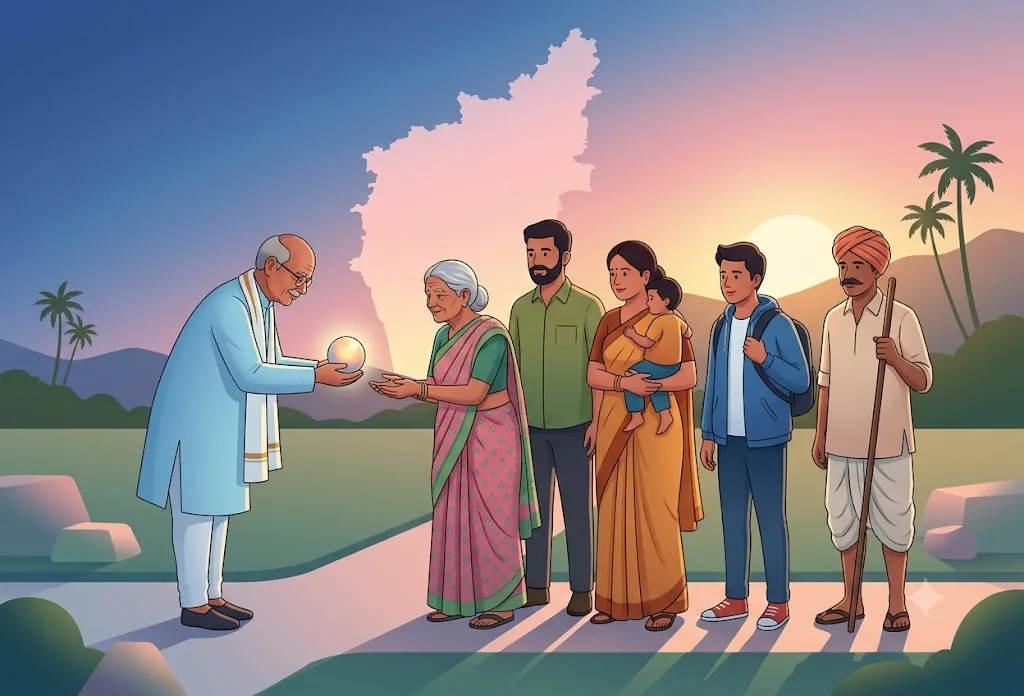
We don't believe in power. We believe in responsibilities.
Every position in this party — from booth volunteer to elected representative — is a responsibility taken on, not a power claimed. Office is something you owe back to citizens. The recall mechanism exists for the day it stops being so.
One spine, four front doors, six publishing surfaces.
The operating spine has three architectural layers. Four front doors are the interaction layer — one per audience. Six publishing surfaces are the data layer — each purpose-built for a specific class of state data. The Karnataka State Service Log (KSSL) ties them together with mediation, append-only logging, and public cryptographic anchoring.
One audience, one door.
- JANATA Citizens · phone-first; Kannada-first and offline-capable by design
- Officer Console Government workflow · for every state employee
- Business Portal Firms · suppliers · tax · single window
- Civil Society Interface APIs · bulk data · independent verifier mode
All four are open-source; civil society can run their own builds.
Right data, right governance.
- Open Ledger Financial spine · every rupee, contract, milestone
- AI-Use Register Governance of all AI deployed by the state
- Karnataka Open Data Portal Public datasets · machine-readable
- Citizen Data Trust Personal records · consent-based
- Karnataka Digital Twin Geospatial raw store · 3D state model
- Sector operational systems Each governed by its sector authority
Mediation, logging, anchoring.
- Append-only ledger Every inter-system call logged · never rewritten
- Citizen consent tokens No record accessed without an active token
- Signed receipts Every state action gets a cryptographic receipt
- Independent witnesses Civil-society verifier nodes co-sign critical state transitions
Don't take our word for it. Click around.
The manifesto describes systems — so we built working previews you can open right now. Same architecture, small scale: the citizen app, the community platform, and the officer console.

JANATA citizen app
The citizen front door — services, documents, grievances, dashboards. A working preview of how one login reaches the whole state. Preview is English-first; Kannada and offline mode are in build.
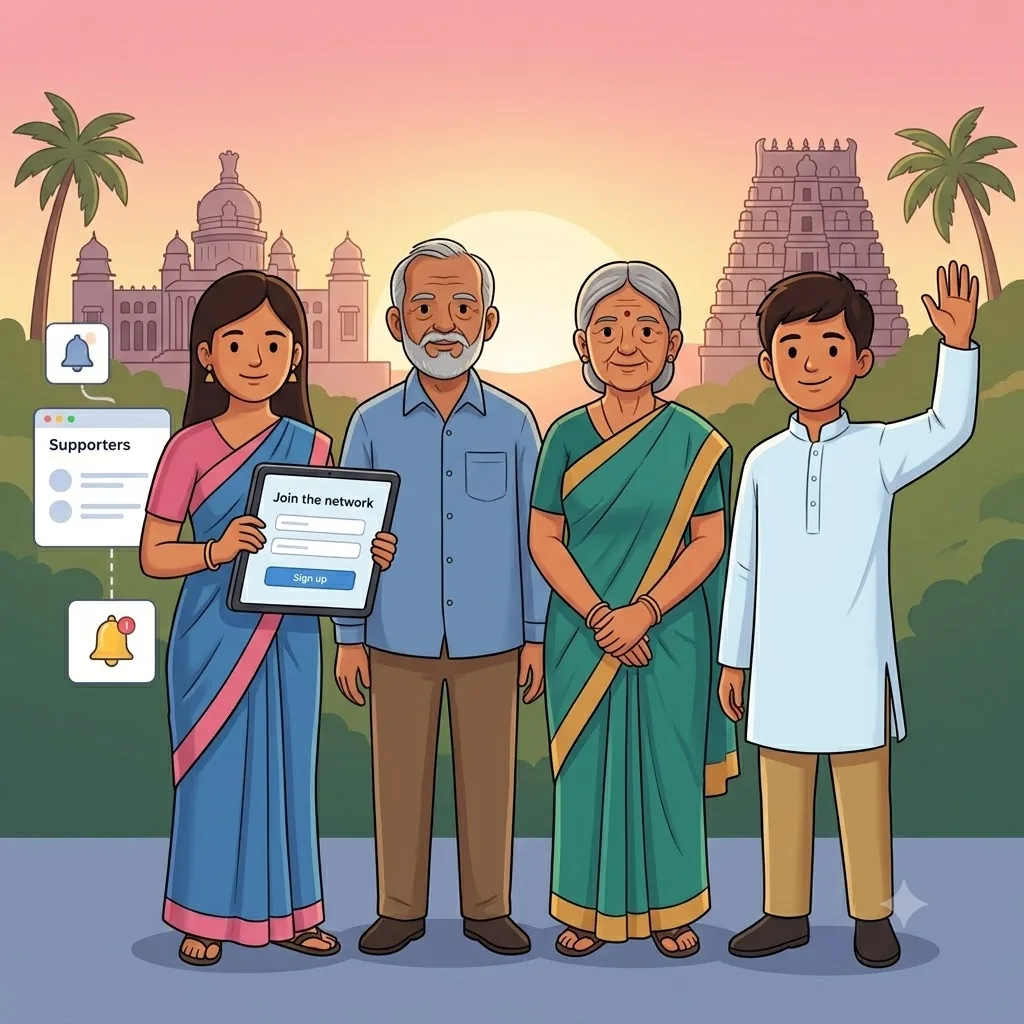
TPM Samvaada
The party's community platform — 30 district committees and topical katte where members debate the model and shape the review. English + ಕನ್ನಡ.

Karnataka CMS
The officer console preview — service charters, workflows, escalations. How Mission Control looks from the government side of the counter.
The People's Model is a Karnataka governance movement that designed the state's next operating system — and published all of it for public review first.
A 23-chapter manifesto, 12 sector blueprints, working prototypes. Read it in the browser, listen to it as a podcast, or ask the AI assistant in the corner 💬 — it answers from the manifesto itself.
Three commitments worth knowing before you read further.
Of the hundreds of commitments inside the manifesto, three are worth meeting on the homepage. Two are entitlements that change what the state owes residents; one is a daily practice that changes what we ask of every student.
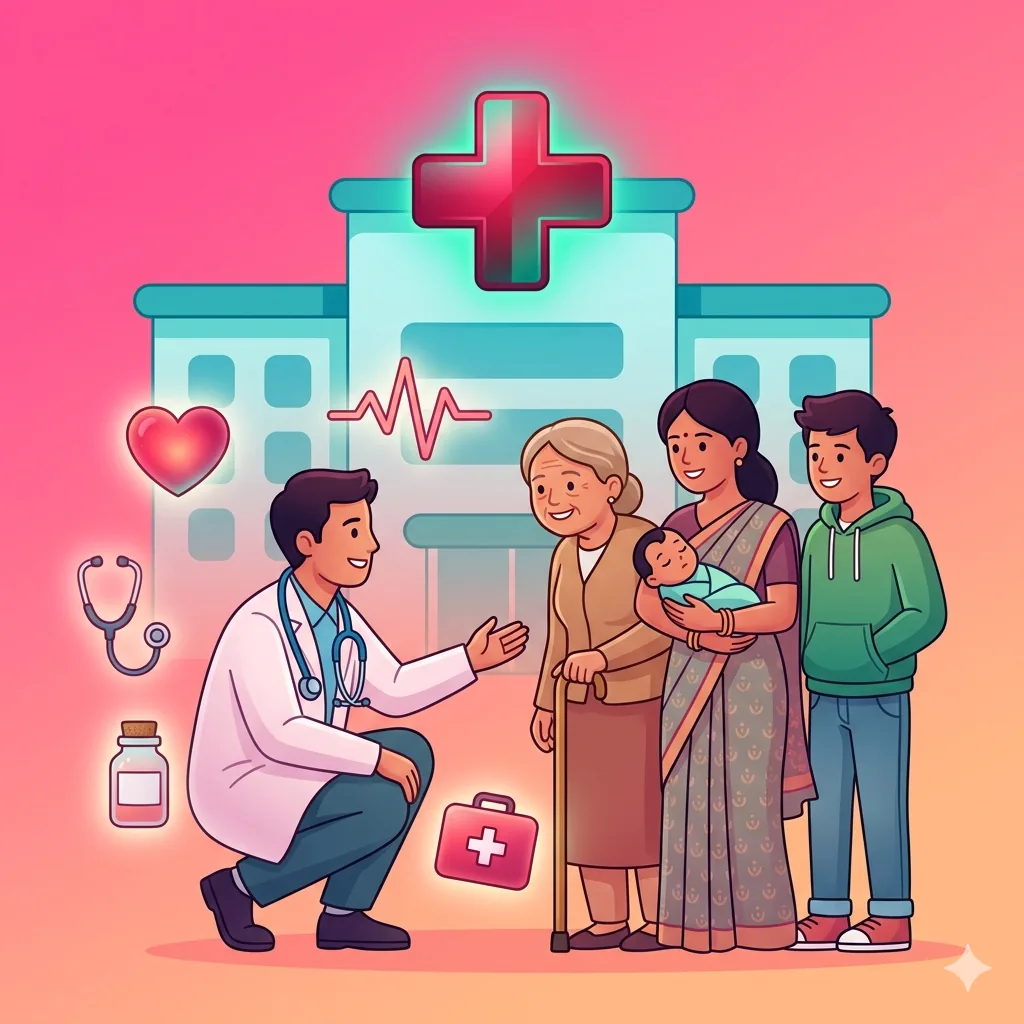
Universal free coverage of every unforeseen serious illness.
Primary and secondary care free at point of care from Year 1. The Catastrophic Care Fund covers tertiary and rare-disease care by Year 5. By Year 10, every Karnataka-domiciled resident has free access to the full diagnostic-and-treatment stack — every district hospital and tertiary hub equipped — with no means test. Elective and lifestyle care remains paid. What a citizen cannot predict and cannot bear alone is the state's burden.
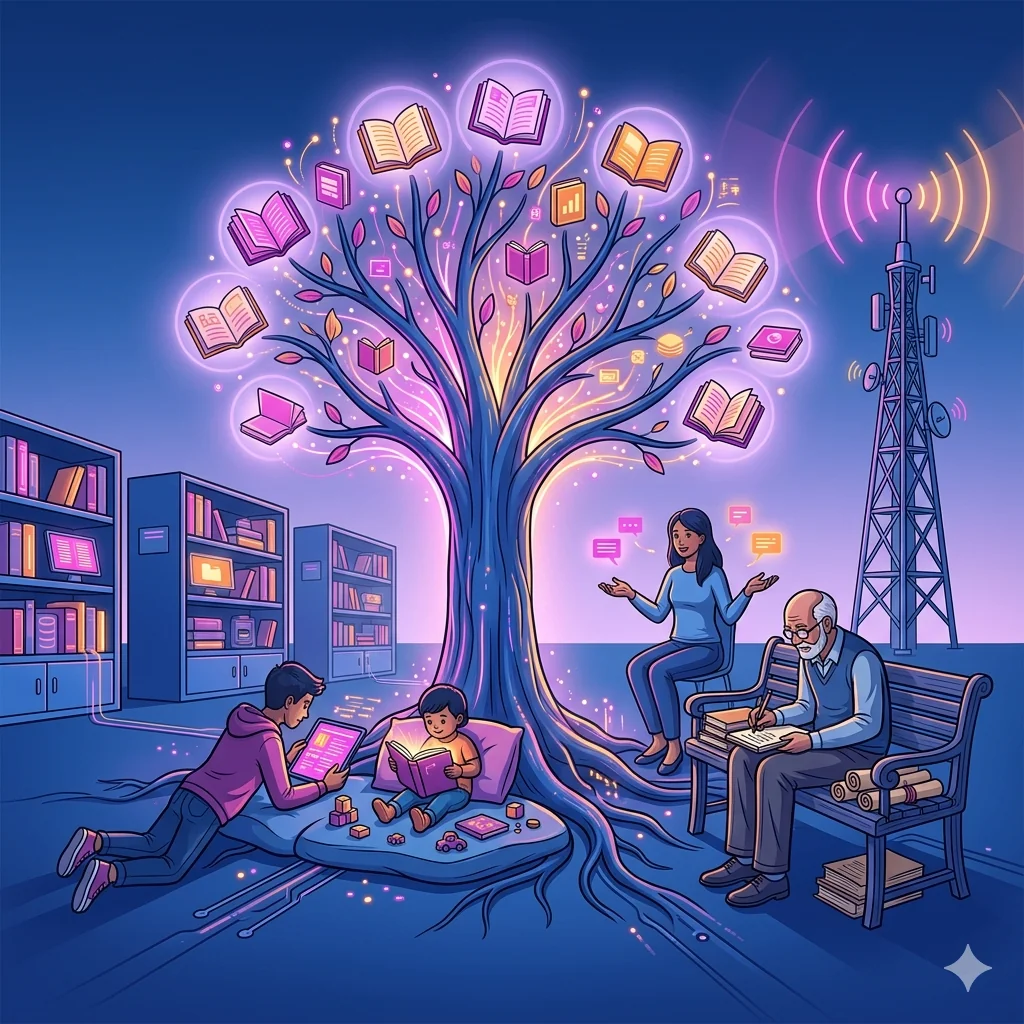
The Learning State.
Karnataka becomes a single educational institution — for every citizen, at every age. Public-space learning surfaces in 7,000 libraries, parks, transit hubs, markets and PHCs. The Karnataka Public Broadcaster (KPB) with BBC-trust-style independence. A district + taluk museum network. A District Higher Education Campus (DHEC) in every district. The Karnataka Apex Institute (KAI) as state flagship. Six statutory durability mechanisms ensure the second 5 years happen regardless of who wins the next election.
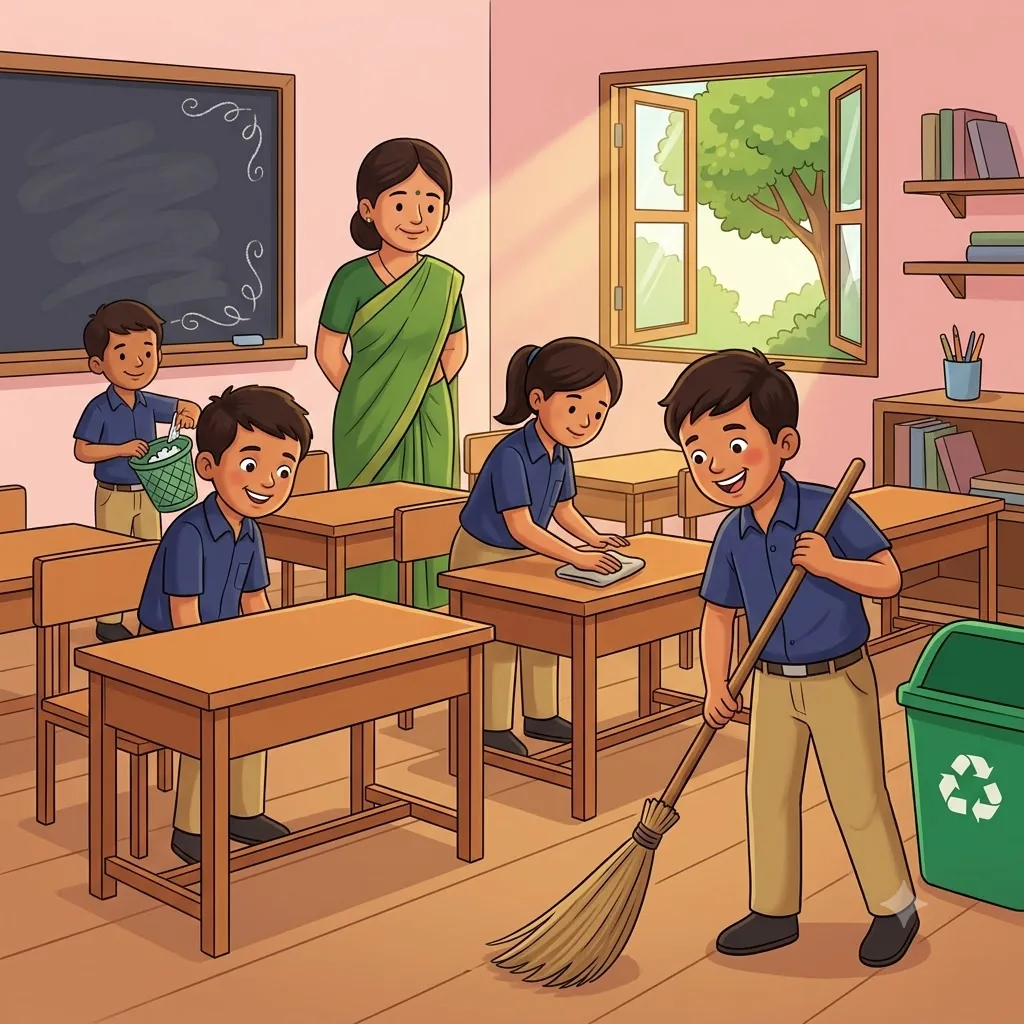
Students clean their own school.
Every government school and state-funded college schedules a daily cleaning window — students clean their own classrooms, corridors, playgrounds. Published rosters; equal participation by every student regardless of caste, gender, or background. Supervised by teachers, with a new Sanitation & Lifestyle Educator cadre in larger schools. Cleaning the space you study in is part of learning to be a citizen.
The manifesto, as a conversation.
No time to read the manifesto? Listen instead — two AI hosts unpack the model, episode by episode, in English and ಕನ್ನಡ.
Read it. Question it. Improve it.
The full manifesto — three volumes, 52 documents — is open for public reading in the browser, and for paragraph-by-paragraph editorial review by application. Every substantive decision from the review is published.